Çetin Efendi
The Museum of InnocenceÇetin Efendi is Kemal Basmacı’s driver and steadfast companion through the long years of his visits to Füsun and her family. More than a means of transport, he is the reliable presence that makes Kemal’s private ritual possible: he drives him across Istanbul, waits while he sits with the Keskin family, and remains beside him when the city outside their home becomes dangerous. His quiet loyalty is tested by grief, political violence, and martial law, and made unmistakable when he intervenes for Kemal at a checkpoint.
Role and Relationship with Kemal
After Kemal’s father died, Kemal recalled that his father had entrusted both Çetin Efendi and the car to his care. When Osman came to the Fatih Hotel with news of the death, Çetin Efendi drove Kemal back across the Atatürk Bridge to his family home. The journey took place on a bleak winter day, and the view of the Golden Horn stayed bound in Kemal’s memory to his loneliness. The episode establishes Çetin Efendi as part of the family’s practical world, but also as someone present at the passage between Kemal’s life at the hotel and the return home prompted by bereavement.
On May 19, 1976, Çetin Efendi drove Kemal to Füsun’s family home in Çukurcuma. Kemal gave him a cover story: they were returning a children’s tricycle to Nesibe. He picked up the tricycle and a pair of pearl earrings at the Merhamet Apartments, then set out through heavy rain with a bouquet of red roses. Çetin Efendi knew the address and carried out the journey without being told Kemal’s real purpose: Kemal intended to ask for Füsun’s hand in marriage. At the house, Çetin Efendi stood behind him holding an umbrella, a composed presence as Kemal approached the family and discovered how much had changed during their separation.
The journey home after that first reunion brought a different kind of knowledge. Kemal, semiconscious in the back seat, understood that Füsun and her husband might regard him as a wealthy relative who could help finance their ambitions in film. He also imagined Füsun becoming a famous actress. Çetin Efendi drove through the dark, flooded avenues and past the Palace Cinema while Kemal drifted between painful recognition and romantic fantasy. The scene places the driver beside Kemal’s private reverie without suggesting that he shares or endorses it.
The Eight-Year Routine
For eight years, when roads were passable, Kemal was not ill or away, and the car was in working order, Çetin Efendi drove him to the Keskin home in his father’s Chevrolet. The routine was strict and repeated. He picked Kemal up in Nişantaşı shortly before seven in the evening; they met traffic around Harbiye, Taksim, and Sıraselviler before descending through Cihangir and Firuzağa past the Çukurcuma Hamam. Some evenings they took another route by Dolmabahçe and Tophane, turning onto Boğazkesen Avenue. Each approach to the Keskin street stirred the same mixture of joy and panic in Kemal.
On the way, Kemal sometimes asked Çetin Efendi to stop so he could buy food or flowers. About every other visit, he brought Füsun a small, joking present: Zambo Chiclets, or a brooch or barrette decorated with butterflies, found in Beyoğlu or the Covered Bazaar. The driver’s role thus encompassed not only the long journey but the pauses that let Kemal turn an ordinary evening into a carefully sustained approach to Füsun.
While Kemal spent the evening inside, Çetin Efendi made a place for himself in the neighborhood. Rather than park directly in front of the house, he waited at nearby establishments such as the Black Sea Coffeehouse or the Evening Teahouse. There he read the newspaper, joined conversations, watched television, and sometimes played backgammon or observed a game of Konken. Over time, local residents recognized both men. They generally understood Kemal as a modest visitor to poor distant relations, and many believed he was involved with Füsun’s husband in a film project meant to help her become a movie star. Çetin Efendi’s own habits of waiting helped make the repeated visits legible to the neighborhood as a familiar social routine.
The visits accumulated into an extraordinary measure of time: Kemal counted 1,593 evenings at the Keskin home. He often arrived around seven and stayed until shortly after the national closing ceremony on television, near midnight, spending an average of about five hours there. Çetin Efendi’s repeated drives gave this private attachment a dependable schedule. Yet the journeys were not emotionally neutral for him to conduct: on evenings when Kemal left the house miserable, he rode in the back seat as Çetin Efendi drove him through streets that had seemed lively on happier nights and ugly on the unhappy ones.
Driving Through Violence and Curfew
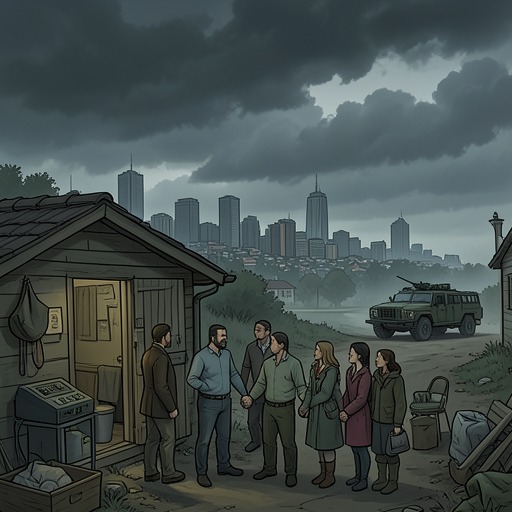
As political violence intensified, the evening route became dangerous. By 1978, bombs were exploding in the neighborhood, and armed factions fought for control of streets, coffeehouses, and squares. Çetin Efendi was sometimes caught in the crossfire and could not be sure where to park the Chevrolet or which coffeehouse would be safe to wait in. Nevertheless, when Kemal suggested going to the Keskin home alone, Çetin Efendi firmly refused. Their continued journeys therefore depended on a companionship that was also a form of protection, even when neither could make the streets safe.
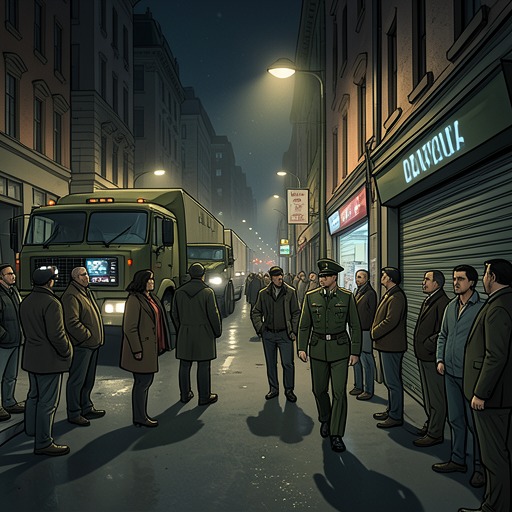
After the September 1980 coup, martial law brought a ten o’clock curfew. The new restriction forced Kemal to leave the Keskin home before he felt he had seen enough of Füsun. On these evenings Çetin Efendi drove quickly through streets emptied by the approaching deadline. The routine continued, but its ending was imposed by the state: Kemal’s distress at being hurried home became one of the ways he remembered the harm caused by military rule.
One curfew-night stop revealed how differently the two men responded under pressure. Soldiers ordered them out of the Chevrolet on Sıraselviler Avenue, checked their identity cards, and searched the car, including its glove compartment and the space beneath the seats. When a soldier asked about the quince grater, Kemal fell silent. Çetin Efendi answered for him, identifying it as an ordinary grater. The officer took the object and their identification cards to a military truck, leaving the two men waiting in the car as the curfew began. They listened to the clock and to martial-law bulletins on the radio; Kemal grew anxious at the thought that the grater might be confiscated.
After the soldiers returned their cards and released the Chevrolet, Çetin Efendi started the engine. Kemal, however, got out and went to retrieve the grater. The officer mocked him for having found his voice at last. In this brief exchange, Çetin Efendi’s intervention has already exposed Kemal’s inability to speak under the pressure of guilt and fear: the driver supplies the simple answer that Kemal cannot give. His steadiness does not erase Kemal’s silence, but it prevents that silence from leaving the object unexplained.
Loyalty at Personal Risk
A later evening brought the driver and passenger into danger of a different kind. After Füsun and Kemal exchanged a long, cautious look and he lit the cigarette at her lips, Kemal left the house at ten past eleven, well after curfew. Çetin Efendi drove him back to Nişantaşı, then left the car at a garage on Nigâr the Poetess Street and walked through the backstreets to his home in a nearby shantytown, trying to avoid detection. Kemal remembered the night chiefly for his sudden happiness and the possibility that he and Füsun might marry; Çetin Efendi’s route afterward shows the physical risk folded into that private moment. His loyalty extended beyond getting Kemal to the door: he remained responsible for the car and had to make his own way home through the curfew-bound city.
Across the narrative, Çetin Efendi is defined less by declarations than by repeated acts: bringing Kemal to Füsun’s home, waiting among local regulars, refusing to leave him to travel alone, and speaking when Kemal cannot. Kemal’s memories place the driver beside an intimate story without making him its protagonist. The eight-year routine gives him a distinctive narrative function: he carries the private world of the Keskin household through a changing city, and his reliable presence makes visible both the persistence of Kemal’s visits and the danger surrounding them.